Every year on the third Tuesday of September, the Netherlands celebrates Prinsjesdag, one of the country’s most important political and ceremonial days. The King travels through The Hague to deliver the Troonrede (Speech from the Throne), outlining the government’s main plans for the year ahead. But this tradition has a surprisingly long and colorful history.
From 1814 to Today
The first opening of the Dutch parliament by the monarch took place on 2 May 1814, when Willem Frederik, later King Willem I, addressed the States General. At that time, the Netherlands was not yet a kingdom. The opening date changed several times: November, October and eventually September. In 1887, it was moved to the third Tuesday of September, partly so politicians travelling from across the country would not have to travel to The Hague on a Sunday.
Interestingly, the name Prinsjesdag originally had nothing to do with the opening of parliament. It referred to the birthday of Prince William V, celebrated on 8 March during the Dutch Republic. The name gradually became associated with the royal ceremony we know today.
The Golden Coach and the Famous Briefcase
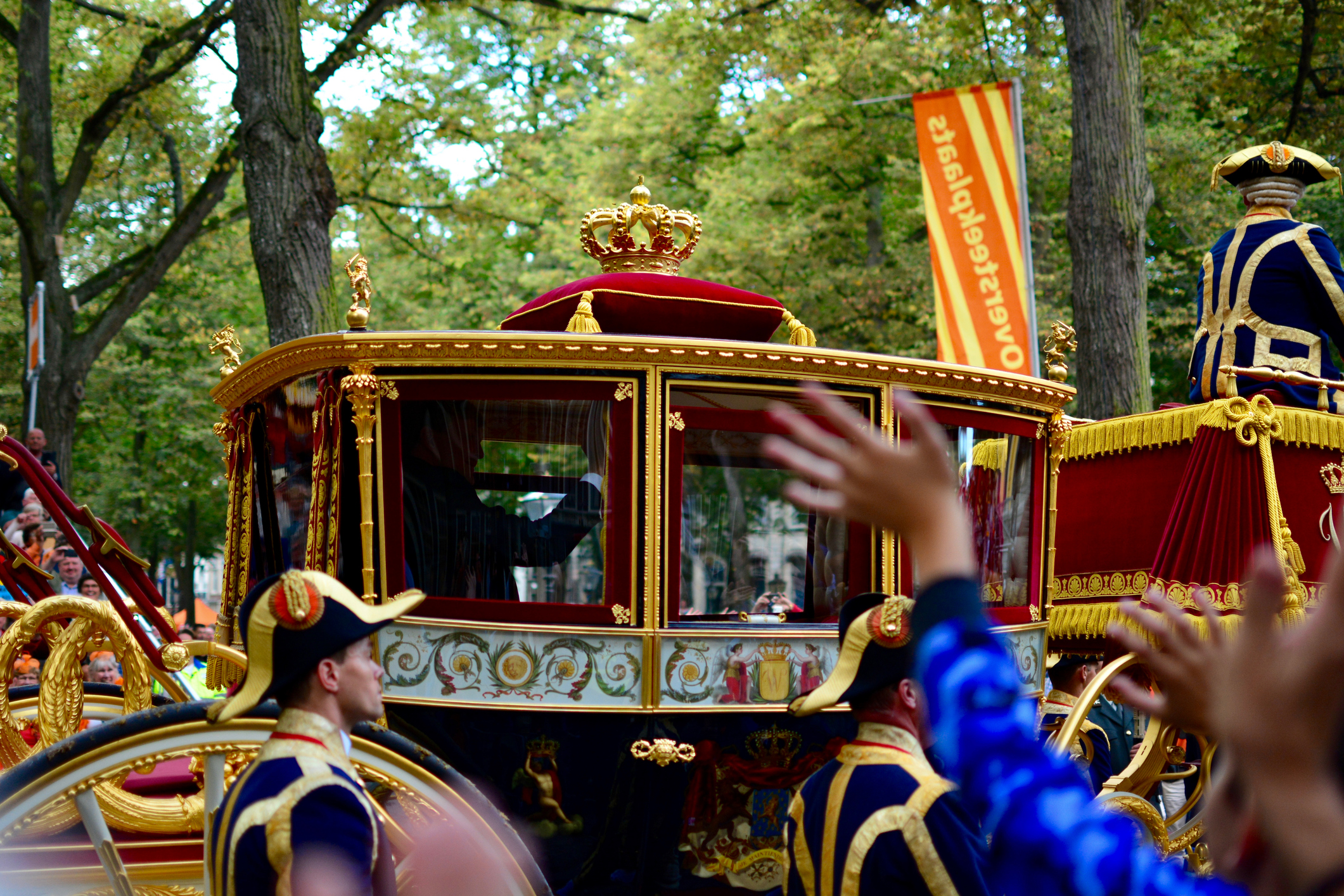
For decades, the Golden Coach was one of the most recognizable symbols of Prinsjesdag. Queen Wilhelmina first used it for Prinsjesdag in 1903. Since 2016, it has been undergoing restoration and the Glass Coach has been used instead.
Another familiar tradition is the Finance Minister’s briefcase, ‘Het Koffertje’. It dates back to 1947, when Minister Piet Lieftinck introduced it to present the national budget in style.
The Prinsjesdag Hat Parade
One of the most colourful traditions of Prinsjesdag is the hat parade, de Hoeden Parade. Politicians and guests often arrive wearing striking, elegant or sometimes wonderfully extravagant hats. The tradition became especially popular through former politician Sybilla Dekker, who helped turn Prinsjesdag into a showcase for creative headwear.
Today, the hats are almost as closely associated with the day as the royal ceremony itself. Bright colours, unusual shapes and bold designs attract plenty of attention from photographers and the public. For many Dutch people, spotting the most remarkable hat has become a fun Prinsjesdag tradition of its own.
Prinsjesdag is therefore much more than a political event. It is a fascinating combination of Dutch history, monarchy, politics and tradition — all packed into one very special day.