King’s Day, how did it actually start? And how has it changed over the years? And 3 funny tips for expats on how to celebrate Koningsdag.
Prinsessendag – A Royal Beginning (1885)
King’s Day—Koningsdag—is one of the Netherlands’ most vibrant national celebrations, but it began modestly. The first version, Prinsessendag, Princess’s Day, was celebrated on August 31, 1885, in honor of Princess Wilhelmina’s fifth birthday. It was designed to promote national unity in a young constitutional monarchy. When Wilhelmina became queen in 1890, the day evolved into Queen’s Day (Koninginnedag), celebrated with public festivities, parades, and patriotic displays—initially focused on children and community gatherings.
Koninginnedag – Shifting Dates, Growing Traditions
The holiday shifted dates with each monarch. Under Queen Juliana (reigned 1948–1980), Queen’s Day moved to April 30, her birthday, and became more informal—featuring the royal family visiting towns across the country. Queen Beatrix retained April 30 out of respect for her mother, even though her own birthday was in January.
Koningsdag – The New Way of Celebrating King’s Day
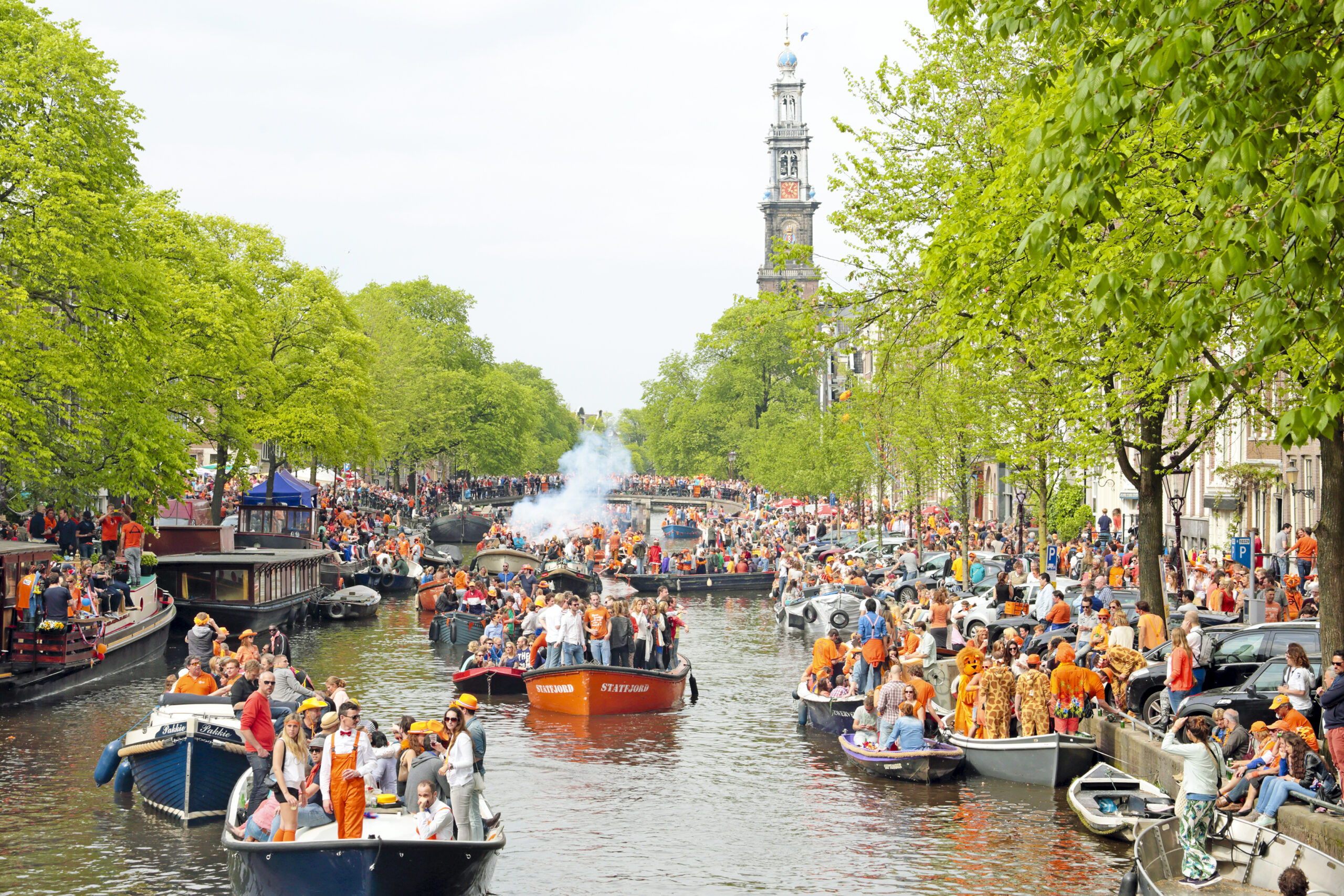
In 2013, with the ascension of King Willem-Alexander, the holiday became King’s Day and moved to April 27. In recent years, King’s Day has evolved into a hybrid celebration that blends tradition with modern lifestyle trends. Alongside the classic vrijmarkt and royal visits, younger generations are reshaping the day with large-scale electronic music festivals, rooftop parties, and curated urban events in cities like Amsterdam and Rotterdam.
Digital tools now play a role too—apps help people navigate crowded areas, find the best markets, or organize meetups. This modern twist keeps King’s Day relevant, inclusive, and aligned with contemporary culture while preserving its unmistakable orange identity.
Bezet -“Occupied” Spots and the Free Market
A defining feature of King’s Day is the vrijmarkt—a nationwide flea market where anyone can sell goods without a permit. A familiar sight is the night before, when people claim spots by marking them “bezet” (occupied). Streets fill with chalk lines, tape, and signs reserving prime locations. Though informal, this practice is widely accepted and reflects Dutch pragmatism and mutual understanding. “Bezet” captures the anticipation of King’s Day and the communal spirit of the vrijmarkt, where personal enterprise meets neighborhood tradition in a lively open-air market.
3 Funny Tips for Expats to Celebrate King’s Day
- Go Full Orange… No Half Measures
Wearing a small orange accessory is not enough. Think bright orange pants, a ridiculous hat, and maybe even face paint. If you don’t look like a walking carrot, you’re underdressed. - Master the Art of the Vrijmarkt Bargain
Practice your Dutch by negotiating over things you definitely don’t need—like a secondhand waffle iron or a mysterious box of cables. Bonus points if you confidently say “mag het voor de helft?” and have no idea what comes next. - Pretend You Understand the Games
If you see people throwing sponges, dancing in the street, or playing oddly specific games—just join in. Smile, nod, and act like this is completely normal. Honestly, no one really knows what’s going on anyway.
Why It Still Matters
King’s Day is more than a party. It’s a living example of how tradition can evolve without losing its core purpose: unity, identity, and shared celebration. Whether you’re browsing a street market or watching the king join in a classic Dutch game, the message is clear—the monarchy, at least on this day, is part of the crowd.