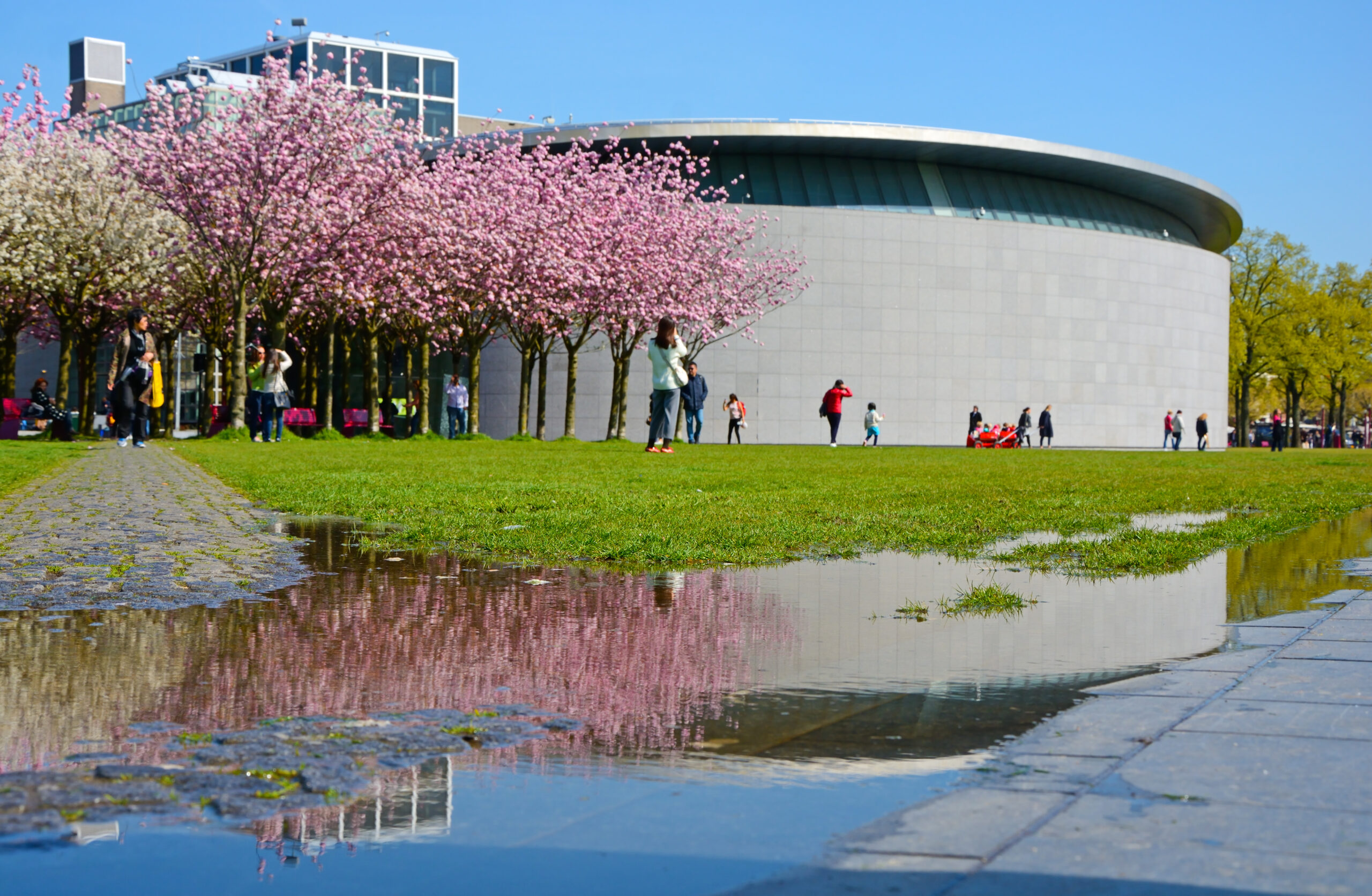
7 Beautiful Dutch Spring Words
The Dutch language has many charming words that perfectly capture the feeling of spring. From sunshine and blossoms to birds singing in the morning, these beautiful Dutch spring words describe the season in a vivid and poetic way.
Here are 7 of the most beautiful Dutch words for spring, with simple explanations and short dialogue examples that show how they capture everyday spring moments. Note that Dutch people love to stick words together, making them all closed compound words (samengestelde woorden).
1. Voorjaarszon (voorjaars-zon)
Meaning:
The gentle spring sunshine that feels extra warm and welcome after a long winter.
Example dialogue
Lisa: “Het is maar 12 graden en iedereen zit buiten.”
Mark: “Dat is de kracht van de voorjaarszon. Na de winter voelt zelfs een beetje zon al heerlijk.”
In English
Lisa: “It’s only 12 degrees and everyone is sitting outside.”
Mark: “That’s the power of the voorjaarszon. After winter, even a little sun feels amazing.”
2. Bloesempracht (bloesem-pracht)
Meaning:
A poetic Dutch word describing the spectacular beauty of trees covered in blossom, like cherry or apple trees.
Example dialogue
Eva: “Kijk eens naar die bomen!”
Noah: “Ja, de hele straat is roze.”
Eva: “Dat noemen we dus bloesempracht—overal bloesem.”
In English
Eva: “Look at those trees!”
Noah: “Yeah, the whole street is pink.”
Eva: “That’s what we call bloesempracht—blossom everywhere.”
3. Frisgroen (fris-groen)
Meaning:
The bright fresh green color of new leaves appearing on trees and plants in spring.
Example dialogue
David: “Het park ziet er deze week ineens heel anders uit.”
Sophie: “Ja hè? Alles is ineens weer frisgroen.”
David: “De winter lijkt nu al ver weg.”
In English
David: “The park looks completely different this week.”
Sophie: “Right? Everything is suddenly frisgroen again.”
David: “Winter feels far away already.”
4. Lentebries (lente-bries)
Meaning:
A soft, refreshing spring breeze that makes the transition from winter to spring feel real.
Example dialogue
Mila: “In de zon is het warm, maar in de schaduw nog een beetje fris.”
Lucas: “Dat is de lentebries—een klein beetje winter dat nog blijft hangen.”
In English
Mila: “It’s warm in the sun but still cool in the shade.”
Lucas: “That’s the lentebries—a little reminder winter just left.”
5.Lentebloemen (lente-bloemen)
Meaning:
Lentebloemen means spring flowers—the flowers that are among the first to bloom after winter, bringing color and life back to gardens, parks, and fields.
Crocus
A crocus is a small, early spring flower that often blooms while it’s still cold. Crocuses usually appear in purple, yellow, or white and are often the first sign that spring is coming.
Example dialogue
Sophie: “Kijk, die kleine paarse bloemetjes in het gras.”
Daniel: “Dat zijn crocussen. De eerste bloemen van de lente.”
Sophie: “Dus de lente is officieel begonnen!”
In English
Sophie: “Look at those tiny purple flowers in the grass.”
Daniel: “Those are crocuses. The first flowers of spring.”
Sophie: “So spring is officially starting!”
6. Narcis
Narcis means daffodil, a bright yellow spring flower that is strongly associated with the arrival of spring in many European countries.
Example dialogue
Anna: “Deze gele bloemen zie je ineens overal.”
Tom: “Dat zijn narcissen.”
Anna: “Geen wonder dat iedereen er vrolijk van wordt.”
In English
Anna: “These yellow flowers are everywhere this week.”
Tom: “They’re daffodils—or narcissen in Dutch.”
Anna: “No wonder they make people so happy.”
7. Vogelzang (vogel-zang)
Meaning:
The joyful sound of birds singing, something you hear everywhere once spring begins.
Example dialogue
Lena: “Heb je dat vanochtend gehoord?”
Kai: “De vogels?”
Lena: “Ja! De vogels maakten me wakker voordat mijn wekker ging.”
In English
Lena: “Did you hear that this morning?”
Kai: “The birds?”
Lena: “Yes! The birds woke me up before my alarm.”
8. Lentekriebels (lente-kriebels)
Meaning:
A cheerful, restless feeling people often get when the first warm spring days arrive. It can also refer to excitement, new energy.
Example dialogue
Anna: “Waarom ben je vandaag ineens zo vrolijk?”
Tom: “Geen idee… de zon schijnt, de heldere blauwe hemel, iedereen is buiten… ik denk dat het de lentekriebels zijn.”
Anna: “Dat heb ik elk jaar als het lente wordt.”
In English
Anna: “Why are you suddenly so happy today?”
Tom: “I don’t know… the sun is out, the bright blue sky, everyone is outside, … I think it’s the lentekriebels.”
Anna: “Spring fever. I get that every year too.”
En nu? Ga naar buiten waar de vogels fluiten!
And now? Go outdoors where the birds are singing!
Dutch has a unique way of combining words to describe nature and everyday feelings. Words like bloesempracht and vogelzang capture the small details that make spring feel magical. Whether it’s the warm spring sunshine, the fresh green leaves, or birds singing in the morning, these Dutch spring words perfectly describe the beauty of the season.
Would you like to learn more Dutch spring words or improve your Dutch during a lovely spring walk? Contact us — our tutors would be happy to help.