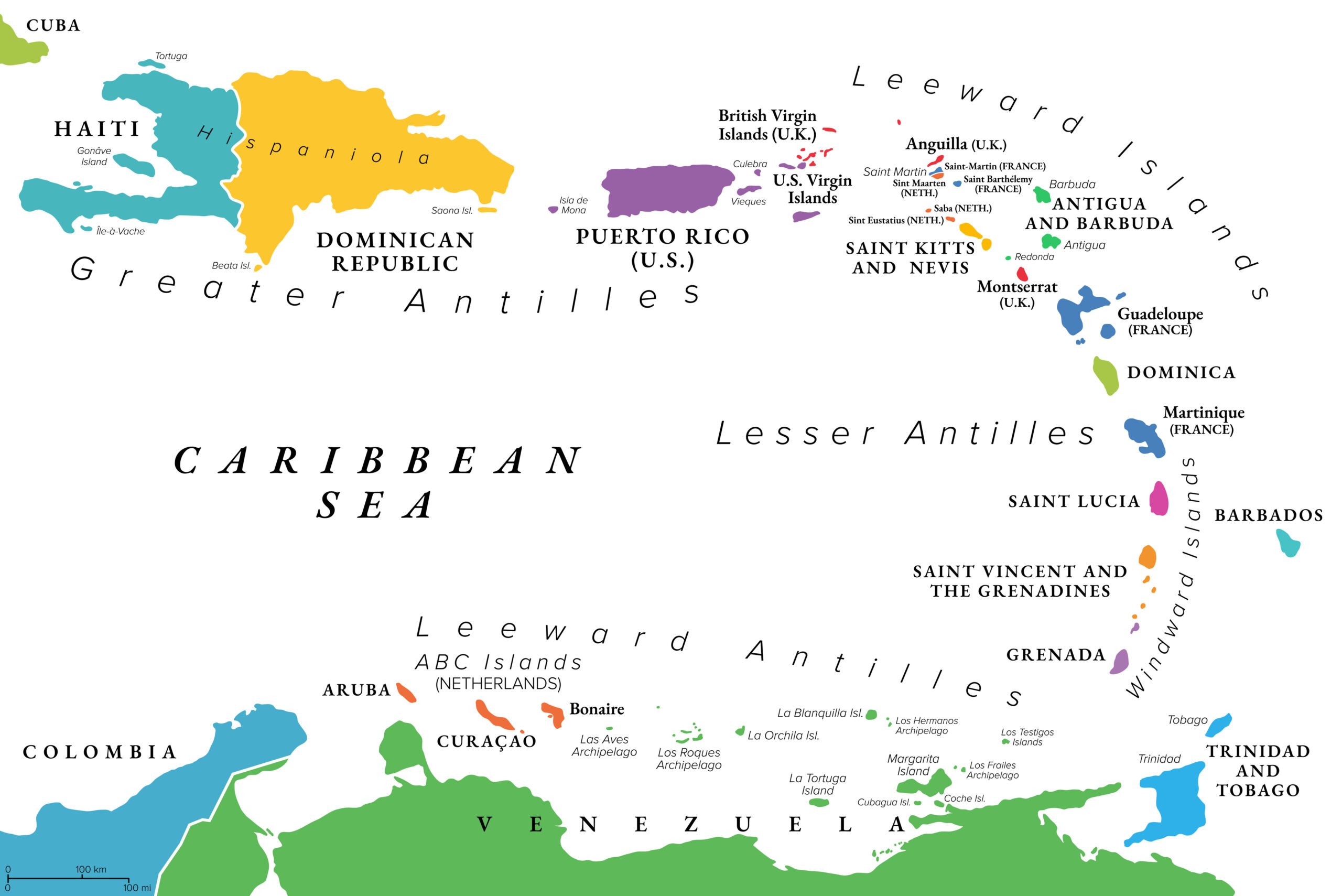
Swaying palm trees on stunning white sandy beaches by an azure-blue sea, flamingos, iguanas, and tropical temperatures. Would you believe we are talking about the Kingdom of the Netherlands?
Countries within the Kingdom
- Netherlands, capital Amsterdam
- Aruba, capital Oranjestad
- Curaçao, capital Willemstad
- Sint Maarten, capital Philipsburg
Special Municipalities of the Netherlands (Caribbean Netherlands)
- Bonaire, capital Kralendijk
- Saba, capital The Bottom
- Sint Eustatius, capital Oranjestad
Together, these six islands are also referred to as the Caribbean part of the Kingdom of the Netherlands.
Historical Development of the Kingdom of the Netherlands
The Kingdom of the Netherlands evolved from a European trading power into a modern constitutional kingdom with territories in both Europe and the Caribbean. After the Napoleonic era, the kingdom was officially established in 1815. During the colonial period, the Netherlands controlled several Caribbean islands that later gained varying degrees of autonomy.
A major constitutional reform took place in 1954 with the Charter for the Kingdom of the Netherlands. This agreement redefined relations between the European Netherlands and the Caribbean territories. Another important transition occurred in 2010, when the former Netherlands Antilles was dissolved, creating the current constitutional structure of the kingdom.
Constitutional Changes in the Dutch Caribbean in 2010
On 10 October 2010, often referred to as “10-10-10,” a major constitutional reform reshaped the Caribbean parts of the Kingdom of the Netherlands. On that date, the former Netherlands Antilles was officially dissolved after years of political debate and referendums on the islands.
Before 2010, the Netherlands Antilles functioned as one autonomous Caribbean country within the kingdom and included five islands: Curaçao, Sint Maarten, Bonaire, Saba, and Sint Eustatius. Aruba had already left the Netherlands Antilles in 1986 and became a separate constituent country within the kingdom.
Why the Constitutional Structure Changed
The islands had different political, economic, and cultural priorities. Some wanted greater autonomy, while others preferred closer ties with the European Netherlands. During the early 2000s, each island held referendums to determine its preferred future constitutional status.
The outcomes varied:
- Curaçao and Sint Maarten voted for autonomous country status, similar to Aruba.
- Bonaire and Saba chose closer integration with the Netherlands.
- Sint Eustatius initially expressed reservations but eventually became part of the same new administrative structure.
The New Legal and Political Structure
After the dissolution of the Netherlands Antilles, Curaçao and Sint Maarten became autonomous constituent countries within the kingdom. They gained responsibility for internal affairs such as taxation, education, and local governance, while defense, citizenship, and foreign policy remained kingdom responsibilities.
Bonaire, Saba, and Sint Eustatius became special municipalities of the Netherlands, collectively known as the Caribbean Netherlands. Unlike Dutch municipalities in Europe, these islands operate under adapted laws because of their size, distance, and Caribbean context. Dutch national law applies in many areas, but exceptions exist for taxation, social security, and administrative systems.
The Importance of the Kingdom Structure
The structure of the Kingdom of the Netherlands is unique within Europe. The 2010 reforms created a more flexible constitutional model within the kingdom. The new arrangement aimed to provide better governance and allow each island to follow a structure aligned with local preferences and economic realities. The events of 2010 remain one of the most significant constitutional transformations in modern Caribbean and Dutch political history.
Are Caribbean Dutch Citizens Better Off Since 2010?
Since the constitutional reforms of 2010, living conditions on the Caribbean islands of the Kingdom of the Netherlands have improved in areas such as infrastructure, healthcare, education, and public administration. Residents of Bonaire, Saba, and Sint Eustatius gained closer access to Dutch social systems and services. However, many islanders also face rising living costs, housing shortages, and concerns about inequality and cultural identity. Public opinion remains divided: some value stronger ties with the Netherlands, while others believe local autonomy and economic fairness still need improvement.