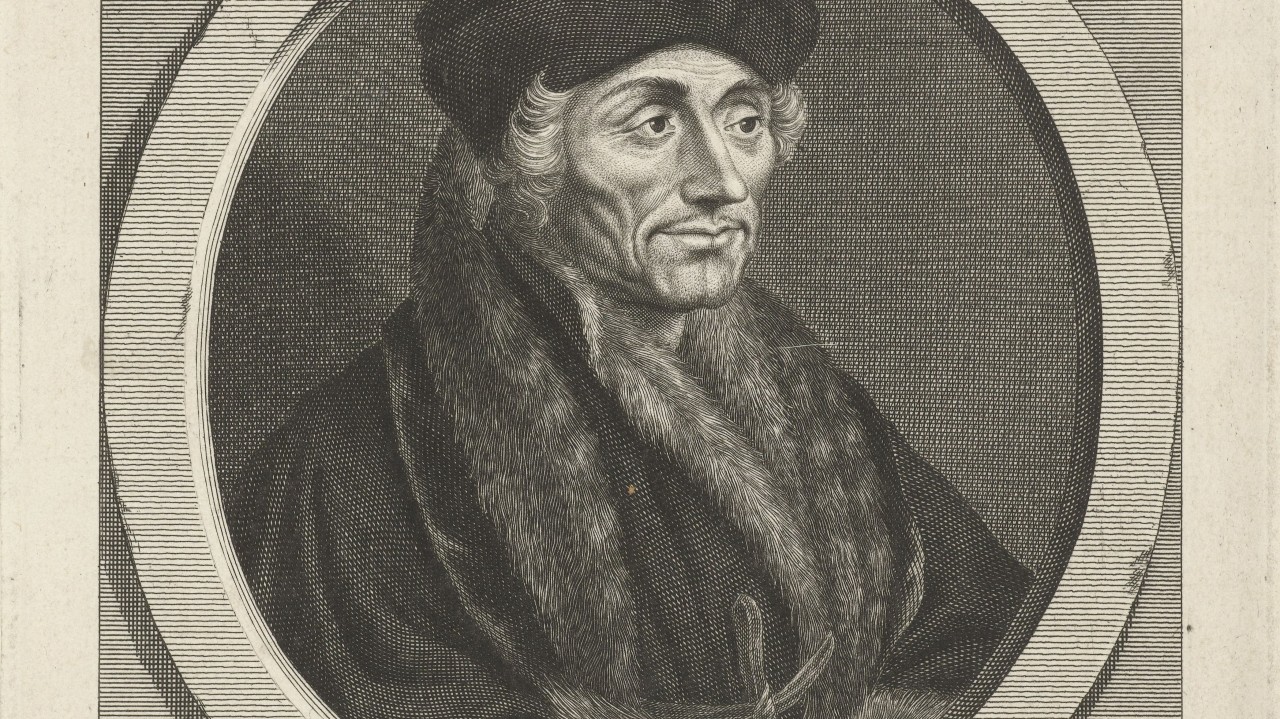
Desiderius Erasmus was a voice with wit and a mind with reach. Born in Rotterdam, Erasmus
challenged dogma and championed dialogue.
No swords. Just words. Ideas that cut deeper than steel. Erasmus’s satire shook Europe and his
translations reshaped faith. He believed in learning without borders – and his legacy still moves
minds today.
Rotterdam, 1466 is a world of power and pulpits. Erasmus decided to choose a
different path – not chains of doctrine, but one of freedom of thought. He walked
away from institutions to speak truth without fear.
A pen sharper than any blade
Erasmus mastered satire. His In Praise of Folly mocked corruption and human folly
with playful precision. It spread like wildfire across Europe, making him the
Renaissance’s sharpest voice.
Reforming faith through reason
He loved Christianity but hated chaos. His Latin New Testament opened doors for
reformers, yet he stood for dialogue, not division.
A thinker without borders
Paris, London, Basel – Erasmus lived everywhere where new ideas were being
shaped. He wrote letters to giants like Thomas More and Martin Luther. His vision?
Education, peace, tolerance. A Europe built on knowledge, not conflict. Erasmus
fought with ideas instead of fists.
Erasmus Program
Centuries later, his name powers the Erasmus Program – sending students across
borders to learn and connect. A fitting tribute to a man who believed wisdom should
wander.
Erasmus quote:
‘Het is de grootste dwaasheid dingen te leren die je later weer moet vergeten.’
‘It is the greatest folly to learn things which you must afterwards forget.’